

Hilton Fitness | Gym Equipment Manufacturers in India | Strength Training & Wellness
Let’s be honest. When most of us first stepped into a gym, we weren’t thinking about metabolic health or cognitive function. We wanted to look good. And there’s nothing wrong with that.
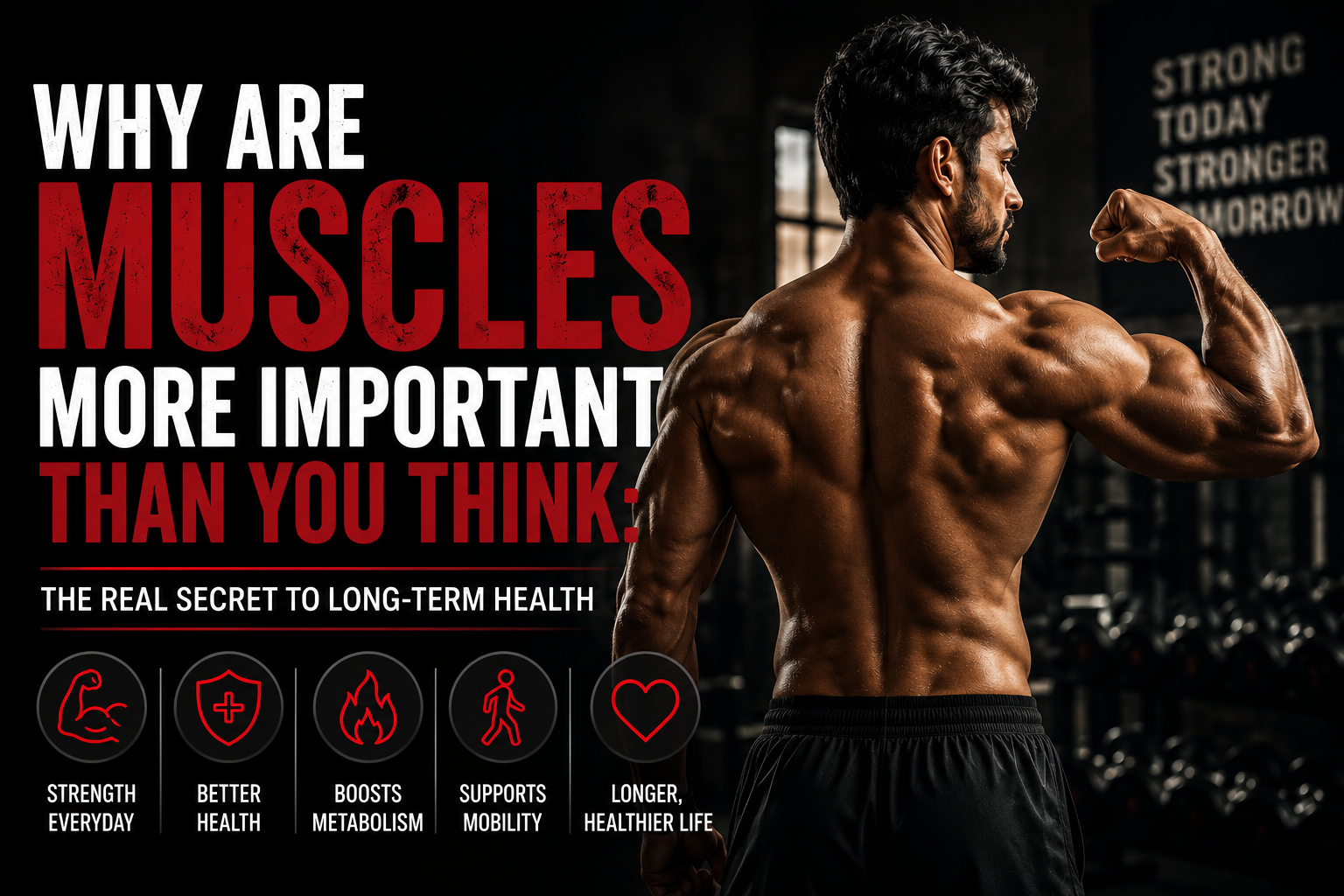
But here’s what nobody tells you early enough: the muscle you’re building for aesthetics is quietly doing something far more powerful in the background. It’s protecting your heart, your brain, your bones, and your future. Muscle isn’t just a fitness goal. It’s one of the most important long-term health investments your body can make, and the science behind it will change the way you think about every workout from here on out.
The Fitness Goal You Didn’t Know You Had
Here’s the shift in perspective that changes everything: muscle is not just tissue you build to look strong. It’s a living, metabolically active system that regulates hormones, manages blood sugar, supports brain chemistry, and even reduces your risk of dying from the most common diseases in the world. That’s not motivational language. That’s peer-reviewed research.
So whether you’re a seasoned lifter, someone just getting started, or a gym owner deciding what equipment to invest in, understanding the real value of muscle changes everything about how you train, why you train, and how long you’ll benefit from it.
1. Muscle Is Your Body’s Most Underrated Metabolic Engine
Most people think of metabolism as something you either have or you don’t, a genetic lottery. What they don’t realize is that muscle mass is one of the most controllable factors in how efficiently your body burns energy.
Here’s why that matters: muscle tissue burns calories even at rest. Unlike fat, which is largely passive, lean muscle requires energy to maintain, which means the more muscle you carry, the higher your resting metabolic rate (the number of calories your body burns just to keep functioning). But the metabolic benefits go deeper than calorie burn. Muscle is one of the primary sites where your body stores and uses glucose. The more lean muscle mass you have, the more efficiently your body manages blood sugar and insulin response, which directly lowers your risk of type 2 diabetes and metabolic syndrome.
What this means for your training: Compound strength movements like squats, deadlifts, rows and presses recruit the most muscle fibers and deliver the greatest metabolic benefit. Equipment that supports proper form and a full range of motion isn’t a luxury. It’s a health investment.
2. Building Muscle Builds a Stronger Brain Too
This one surprises people every time. Resistance training doesn’t just change your body, it actively changes your brain chemistry. When you lift weights, your body increases production of BDNF (Brain-Derived Neurotrophic Factor), a protein that supports memory formation, learning capacity, and mood regulation. Think of it as fertilizer for brain cells.
The research is consistent and compelling: people who engage in regular strength training show better cognitive performance as they age, faster recall, sharper focus, and measurably lower rates of depression and anxiety. One major study found that resistance training reduced symptoms of depression more effectively than aerobic exercise alone. The gym isn’t just a place to train your body. For anyone dealing with mental fog, low mood, or age-related cognitive decline, the weight floor is one of the most evidence-backed interventions available, no prescription required.
Key takeaway: The mind-muscle connection is not a metaphor. It’s physiology. Every rep you complete is doing work above the neck as much as below it.
3. Muscle Is Your Joints, Bones, and Balance’s Best Friend
Here’s a number worth knowing: sarcopenia, the natural, age-related loss of muscle mass, begins as early as your 30s. Without deliberate resistance training, the average adult loses 3–8% of their muscle mass per decade after 30, accelerating significantly after 60. The consequences go well beyond aesthetics. Muscle loss leads to weakened joints, reduced bone density, and declining balance, the combination that makes falls and fractures so common and so dangerous in later life. In fact, a hip fracture in someone over 65 carries a mortality rate of up to 30% within a year. That’s not a statistic people talk about enough.
The good news? It’s largely preventable. Consistent resistance training not only slows sarcopenia, it can reverse it. Strength training increases bone mineral density, reduces fall risk, and keeps the muscular support system around your joints strong enough to protect them through decades of daily movement.
Practical implication: The person lifting weights at 35 is not just building a better body for today. They’re building a body that can still pick up their grandchildren at 75. That’s not hyperbole, that’s what the data shows.
4. More Muscle Means a Longer, Healthier Life: Full Stop
This is where the research becomes genuinely striking.
Higher muscle mass is consistently associated with lower all-cause mortality. That means people with more lean muscle live longer, not just because they’re more active, but because muscle protects the body’s systems at a fundamental level.
Specifically, research links higher muscle mass to:
- Significantly reduced risk of cardiovascular disease and stroke
- Lower incidence of certain cancers
- Better survival outcomes following surgery, illness, and injury
- Improved recovery speed and resilience during medical treatment
One of the most powerful findings in this space is what researchers call the “muscle reserve” effect, the idea that individuals with higher baseline muscle mass handle illness, hospitalisation, and physical trauma better because their bodies have more metabolic and structural resources to draw on.
An important note on heart health: While building muscle strongly supports cardiovascular health, it’s worth going beyond standard markers like total cholesterol or BMI when assessing your heart disease risk. Ask your healthcare provider about apolipoprotein B (apoB) and lipoprotein(a), two tests that paint a far more accurate picture of cardiovascular risk than a standard lipid panel alone. If heart disease runs in your family, strength training is one of your most powerful tools to offset genetic predisposition, not a reason to worry, but a reason to lift.
The Bottom Line: Muscle Is Long-Term Health Insurance
Every rep you do, every set you complete, every session you show up for, it’s not vanity. It’s biology. It’s preventive medicine. It’s one of the most rational long-term health decisions a human being can make. The mirror will show you one version of your progress. Your blood panels, your bone scans, your cognitive sharpness at 70, and your ability to move freely through your 80s will show you the full picture.
Keep lifting. Keep fueling. Keep building.
Because the body you’re building today is the health you’ve been protecting for decades.
Train Smarter. Equip Better.
At Hilton Fitness, we build commercial and home gym equipment engineered for real performance, biomechanically designed to support the full range of motion your training demands, built to last through every session, and trusted by gyms across India for over three decades.
Because if muscle matters this much, the equipment you build it on matters too.
📞 Contact us to equip your gym: hiltonfitness.com